通風工程,工廠通風工程,廠房通風工程,負壓通風工程,整廠通風工程
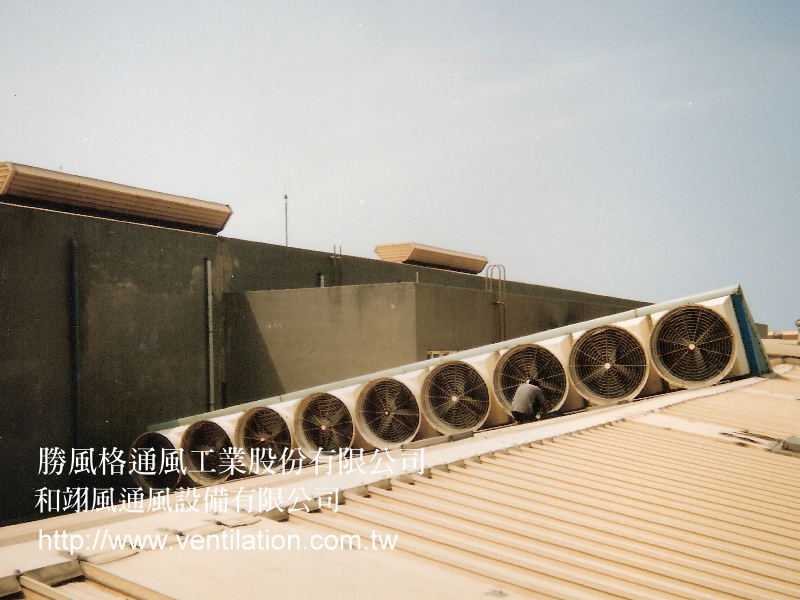 通風工程是一項非常重要的工程項目
勝風格通風工業股份有限公司(和翊風有限公司)
免付費電話: 0800-058-985
台中市大雅區港尾路2-11號
通風工程是一項非常重要的工程項目,尤其對於工廠來說更是不可或缺。工廠通風工程主要是指對廠房內的空氣進行循環、調節和處理,以維持工廠內的空氣質量和溫度穩定,進而提高生產效率和工作環境的品質。其中負壓通風工程和整廠通風工程更是不可或缺的重要工程。
負壓通風工程是指在工廠內安裝一些排風機或者抽風機,使室內的空氣流向室外,這種通風方式能夠有效地排除室內的濕氣、熱氣和污染物,保證工廠內空氣的新鮮度和潔淨度,同時也能夠有效地控制室內的溫度和濕度。負壓通風工程能夠有效地改善工作環境,降低工人的勞動強度,提高工作效率。
整廠通風工程是指對整個工廠內的空氣進行循環、調節和處理,包括進風系統和排風系統,旨在保持整個工廠內的空氣質量和溫度穩定。整廠通風工程需要考慮多方面因素,如廠房的建築結構、工廠的生產工藝和生產設備等,以便設計出最適合的通風方案。整廠通風工程可以通過控制室內的溫度和濕度,保證生產設備的正常運轉,降低設備的損耗和故障率,從而提高工廠的生產效率。
工廠通風工程的設計和施工需要具備專業知識和豐富的經驗。在設計和施工過程中,需要考慮多種因素,如工廠的使用狀況、工廠的生產工藝和工作環境等,以便為工廠量身定制最合適的通風方案。
通風工程的設計與應用
一、通風工程的概念與重要性
通風工程是指透過科學合理的設計與設備配置,確保建築物或工業場所內的空氣流通,提升空氣品質,減少污染物堆積,並維持適宜的溫度與濕度。無論是住宅、商業建築、工業廠房、醫療機構或地下空間,通風工程都扮演著關鍵角色,確保人員的健康與安全,同時提高工作效率與設備運行的穩定性。
良好的通風工程能有效降低高溫、粉塵、濕氣與有害氣體的影響,減少職業病發生率,並提升生產環境的舒適度。隨著環保與節能意識的提升,現代通風工程更強調高效能、低能耗與智能化控制,以達到更佳的環境效益。
二、通風工程的主要功能
空氣品質改善
通風工程能有效排除室內的異味、粉塵、油煙、化學氣體及細菌,確保工作與居住環境的清新空氣供應,降低疾病傳播風險。
溫度調節
在高溫環境下,如工業廠房與機械運作場所,通風系統能幫助排除過多的熱量,降低溫度,減少員工因悶熱而影響工作效率。
濕度控制
在高濕度場所,如地下室、倉儲空間、食品加工區等,通風工程能降低濕氣累積,防止霉菌滋生,維持產品與設備的品質與穩定性。
污染物排放
工廠、實驗室、醫院等特殊環境會產生有害氣體或懸浮微粒,若不適當排放可能危害人體健康。透過通風工程,可迅速排除這些有害物質,確保安全。
節能與環保
現代通風工程注重節能設計,例如使用變頻風機、新風回收系統,減少能源消耗,並提升整體運行效率,符合環保標準。
三、通風工程的類型
根據使用環境與需求不同,通風工程可分為以下幾種類型:
自然通風
透過開放式窗戶、通風口、氣樓等方式,利用自然風壓與溫差來促進空氣流通。
適用於低污染、低溫度累積的場所,如住宅、辦公大樓與學校等。
機械通風
透過風機、排氣扇、空氣交換器等設備,強制驅動空氣流動。
適用於工業廠房、地下停車場、大型商場、醫療機構等。
主要設備包括:離心風機、軸流風機、負壓風機等。
局部排風系統
用於特定污染源的局部控制,如實驗室通風櫃、焊接區排煙罩、餐廳廚房排油煙系統等。
針對特定空間加強通風效果,提高工作環境的安全性。
全熱交換與新風系統
提供高效的空氣交換,將室外新鮮空氣引入室內,同時排除污濁空氣。
適用於對空氣品質要求較高的場合,如醫院、電子廠、食品加工廠等。
四、通風工程的設計要點
空氣流量計算
根據空間大小、人員數量、污染源種類等因素,確定所需的換氣次數(ACH)。
一般而言,辦公室建築換氣次數為610次/小時,工業廠房可能需要達到1530次/小時。
通風設備選擇
選擇合適的風機類型,如離心風機、軸流風機或負壓風機,以達到最佳換氣效果。
考慮設備的風量、風壓、噪音控制與能源消耗,以確保運行效能與環保需求。
進風與排風口配置
確保進風口與排風口的合理佈局,避免短路氣流(即空氣未完全循環就被排出)。
進風口應設於空氣清新處,避免吸入廢氣或污染物。
風管設計與安裝
風管材質需符合使用環境需求,如耐腐蝕風管適用於化學工業,保溫風管適用於空調系統。
風管內部需保持光滑,減少氣流阻力,提高運行效率。
智能控制與節能設計
採用變頻風機,可根據環境需求自動調整風速,降低能源消耗。
搭配空氣品質監測系統,根據CO₂、VOC(揮發性有機化合物)濃度自動啟動或調整通風系統,提高智能化管理效能。
五、通風工程的應用領域
工業廠房
金屬加工、電子廠、食品加工廠等場所需要高效的通風系統,以確保生產環境的安全與穩定性。
商業建築
購物中心、飯店、劇院等大型建築需設計合理的通風系統,以確保空氣品質與節能效益。
醫療機構
醫院的手術室、病房、實驗室等區域需要特殊的高效通風系統,確保無菌與防疫需求。
地下空間
地下停車場、地鐵站、地下商場等密閉環境需強制通風,以降低CO₂與有害氣體濃度。
實驗室與化工廠
需要特別設計防爆、防腐蝕的排風系統,以確保危險化學物質的安全排放。
六、結論
通風工程對於維持良好的空氣品質、保護人員健康與提高生產效率具有至關重要的影響。透過合理的設計與設備選擇,可以有效改善工作與居住環境,降低能耗並符合環保標準。未來,隨著智慧建築技術的發展,通風工程將朝向更高效、智能與節能的方向發展,為人們提供更舒適與安全的空氣環境。
Ventilation engineering is a crucial project, especially indispensable for factories. Factory ventilation engineering primarily refers to the circulation, regulation, and treatment of air within a factory building to maintain stable air quality and temperature, thereby improving production efficiency and the quality of the working environment. Negative pressure ventilation and whole-plant ventilation are particularly essential components.
Negative pressure ventilation involves installing exhaust fans or ventilators within the factory to circulate indoor air outdoors. This method effectively removes indoor moisture, heat, and pollutants, ensuring freshness and cleanliness of the air while also effectively controlling indoor temperature and humidity. Negative pressure ventilation effectively improves the working environment, reduces worker fatigue, and increases work efficiency.
Whole-plant ventilation refers to the circulation, regulation, and treatment of air throughout the entire factory, including both intake and exhaust systems, aiming to maintain stable air quality and temperature throughout the factory. Whole-plant ventilation requires consideration of various factors, such as the factory's building structure, production processes, and equipment, to design the most suitable ventilation solution. Whole-plant ventilation engineering can improve factory production efficiency by controlling indoor temperature and humidity, ensuring the normal operation of production equipment, reducing equipment wear and tear and failure rates.
The design and construction of factory ventilation engineering requires professional knowledge and extensive experience. During the design and construction process, various factors need to be considered, such as the factory's usage conditions, production processes, and working environment, in order to tailor the most suitable ventilation solution for the factory.
Design and Application of Ventilation Engineering
I. Concept and Importance of Ventilation Engineering
Ventilation engineering refers to ensuring air circulation within buildings or industrial sites through scientific and reasonable design and equipment configuration, improving air quality, reducing pollutant accumulation, and maintaining suitable temperature and humidity. Whether in residential buildings, commercial buildings, industrial plants, medical institutions, or underground spaces, ventilation engineering plays a crucial role in ensuring the health and safety of personnel, while improving work efficiency and equipment operational stability.
Good ventilation engineering can effectively reduce the effects of high temperatures, dust, humidity, and harmful gases, reduce the incidence of occupational diseases, and improve the comfort of the production environment. With increasing awareness of environmental protection and energy conservation, modern ventilation engineering emphasizes high efficiency, low energy consumption, and intelligent control to achieve better environmental benefits. II. Main Functions of Ventilation Engineering
Air Quality Improvement
Ventilation engineering effectively removes odors, dust, fumes, chemical gases, and bacteria from indoor environments, ensuring a supply of fresh air in work and living spaces and reducing the risk of disease transmission.
Temperature Regulation
In high-temperature environments, such as industrial plants and machinery operating areas, ventilation systems help remove excess heat, lower the temperature, and reduce the impact of stuffiness on employee work efficiency.
Humidity Control
In high-humidity areas, such as basements, storage spaces, and food processing areas, ventilation engineering reduces moisture accumulation, prevents mold growth, and maintains the quality and stability of products and equipment.
Pollutant Emissions
Factories, laboratories, hospitals, and other special environments can generate harmful gases or particulate matter. Improper emissions can endanger human health. Ventilation engineering can quickly remove these harmful substances, ensuring safety.
Energy Saving and Environmental Protection
Modern ventilation engineering emphasizes energy-saving design, such as using variable frequency fans and fresh air recovery systems, reducing energy consumption and improving overall operating efficiency, while meeting environmental standards.
III. Types of Ventilation Engineering
Based on different usage environments and needs, ventilation engineering can be divided into the following types:
**Natural Ventilation**
Utilizing natural wind pressure and temperature differences to promote air circulation through open windows, vents, and air vents.
Suitable for places with low pollution and low temperature accumulation, such as residences, office buildings, and schools.
**Mechanical Ventilation**
Forced airflow through equipment such as fans, exhaust fans, and air exchangers.
Suitable for industrial plants, underground parking lots, large shopping malls, and medical institutions.
Main equipment includes: centrifugal fans, axial fans, and negative pressure fans.
**Local Exhaust System**
Used for localized control of specific pollution sources, such as laboratory fume hoods, welding area fume hoods, and restaurant kitchen exhaust systems.
Enhances ventilation in specific spaces, improving the safety of the working environment.
**Total Heat Exchange and Fresh Air System**
Provides efficient air exchange, introducing fresh outdoor air into the room while simultaneously removing stale air.
Suitable for environments with high air quality requirements, such as hospitals, electronics factories, and food processing plants.
IV. Design Considerations for Ventilation Engineering
Airflow Calculation
Determine the required air exchange rate (ACH) based on factors such as space size, number of personnel, and types of pollution sources.
Generally, office buildings require 610 air exchanges per hour, while industrial plants may require up to 1530 ACH.
Ventilation Equipment Selection
Select appropriate fan types, such as centrifugal fans, axial fans, or negative pressure fans, to achieve optimal ventilation.
Consider the equipment's airflow, air pressure, noise control, and energy consumption to ensure operational efficiency and meet environmental requirements.
Inlet and Exhaust Vent Configuration
Ensure a reasonable layout of air inlets and exhaust vents to avoid short-circuit airflow (i.e., air being exhausted before complete circulation).
Air inlets should be located in areas with fresh air to avoid drawing in exhaust gases or pollutants.
Duct Design and Installation
The duct material must meet the requirements of the operating environment. For example, corrosion-resistant ducts are suitable for the chemical industry, while insulated ducts are suitable for air conditioning systems.
The interior of the duct must be smooth to reduce airflow resistance and improve operating efficiency.
Intelligent Control and Energy-Saving Design
Utilizing variable frequency fans, the fan speed can be automatically adjusted according to environmental needs, reducing energy consumption.
Equipped with an air quality monitoring system, the ventilation system can be automatically started or adjusted based on CO₂ and VOC (volatile organic compound) concentrations, improving intelligent management efficiency.
V. Application Areas of Ventilation Engineering
Industrial Plants
Metal processing, electronics factories, food processing plants, and other similar locations require efficient ventilation systems to ensure the safety and stability of the production environment.
Commercial Buildings
Shopping malls, hotels, theaters, and other large buildings require well-designed ventilation systems to ensure air quality and energy efficiency.
Medical Institutions
Operating rooms, wards, laboratories, and other areas in hospitals require specialized, high-efficiency ventilation systems to ensure sterility and epidemic prevention requirements.
Underground Spaces
Underground parking lots, subway stations, underground shopping malls, and other enclosed environments require forced ventilation to reduce CO₂ and harmful gas concentrations.
Laboratories and Chemical Plants
Specially designed explosion-proof and corrosion-resistant exhaust systems are needed to ensure the safe discharge of hazardous chemicals.
VI. Conclusion
Ventilation engineering plays a crucial role in maintaining good air quality, protecting human health, and improving productivity. Through proper design and equipment selection, working and living environments can be effectively improved, energy consumption reduced, and environmental standards met. In the future, with the development of smart building technologies, ventilation engineering will evolve towards greater efficiency, intelligence, and energy conservation, providing people with a more comfortable and safer air environment.