水冷扇
勝風格通風工業股份有限公司(和翊風有限公司)
免付費電話: 0800-058-985
台中市大雅區港尾路2-11號
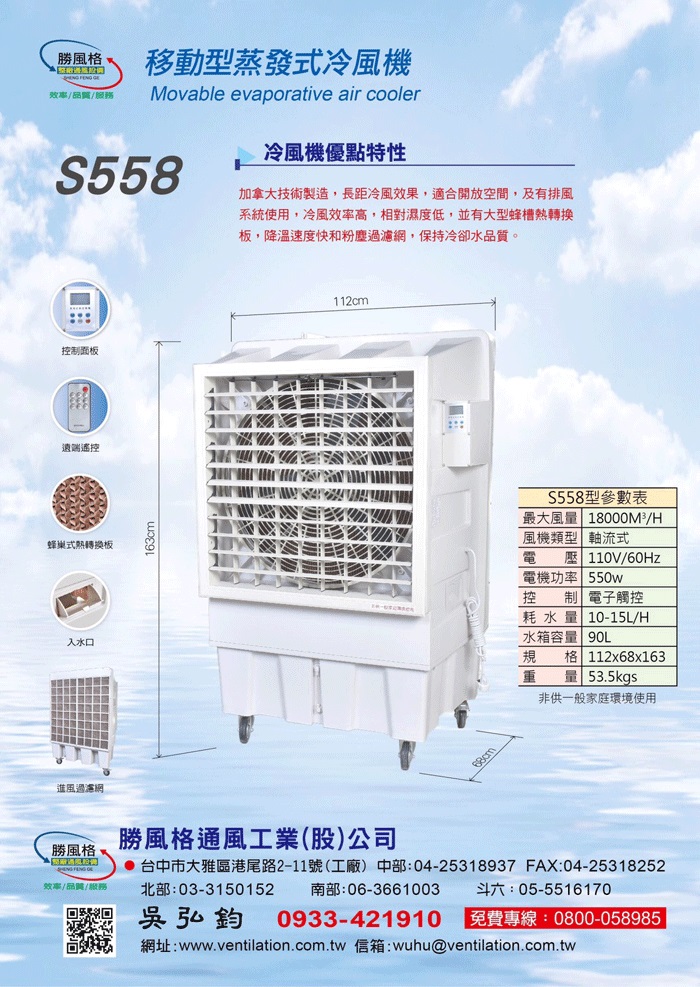 水冷扇是一種利用水的熱容量較大的特性,通過水的流動帶走散熱的風扇 水冷扇是一種利用水的熱容量較大的特性,通過水的流動帶走散熱的風扇。除了在家用電腦等個人設備中應用外,水冷扇也廣泛用於工業生產環境中,其中包括工業水冷扇和移動式水冷扇。
工業水冷扇主要用於工業廠房中,以解決工業生產中的散熱問題。由於許多工業生產環境中都需要使用高功率的機器和設備,這些設備產生的熱量很大,需要通過散熱來保持正常運行。在這種情況下,工業水冷扇可以通過水的流動來吸收和帶走大量的熱量,達到更好的散熱效果。工業水冷扇一般安裝在工廠的天花板上,通過風扇和散熱器的組合進行散熱,可有效地控制工廠的溫度和濕度。
移動式水冷扇則是一種可以隨時移動的散熱設備。它通常是由一個水箱和一個風扇組成,水箱中的水通過風扇的吹風作用進行散熱。移動式水冷扇通常搭配輪子和手柄,便於在工廠中移動和使用。由於移動式水冷扇體積小巧輕便,散熱效果較弱,因此更適合用於小型工廠或辦公室等場所,或用於作為臨時散熱設備使用。
總體而言,水冷扇作為一種高效、可靠的散熱設備,廣泛應用於工業生產和個人使用中。在購買和使用水冷扇時,需要考慮設備的功率、風量、噪音等因素,並根據實際需要選擇適合的型號和規格。此外,定期維護和清潔也是確保水冷扇正常運行和延長使用壽命的關鍵。
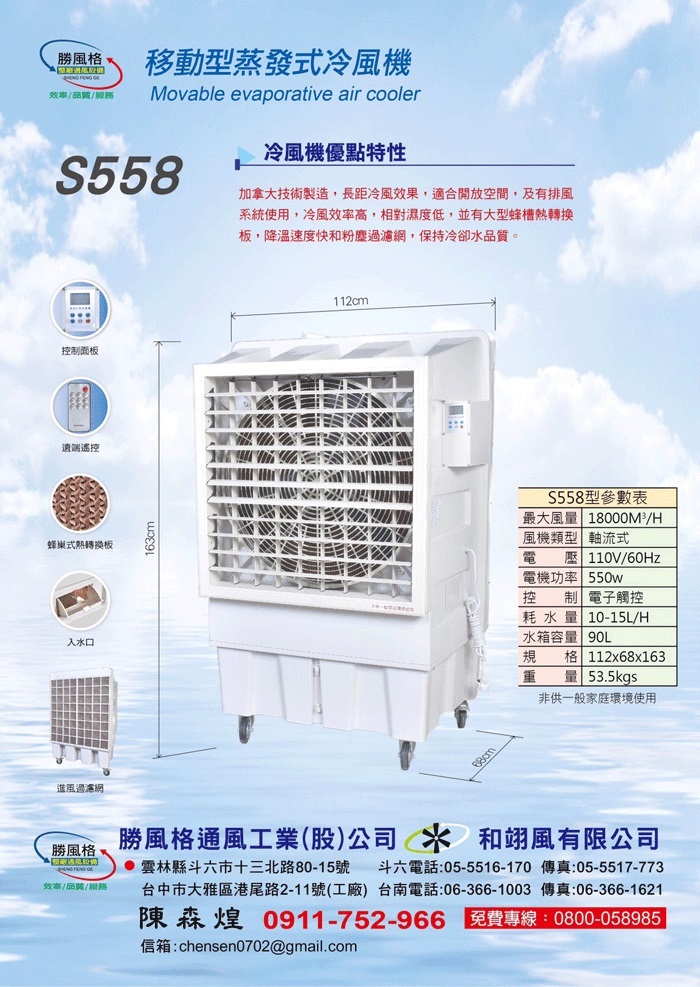 水冷扇可以幫助降低室內的溫度和濕度,讓人們在炎熱的夏季更加舒適。水冷扇是一種適用於各種場所的散熱設備,包括開放和半開放的場所。它可以幫助降低室內的溫度和濕度,提供一個舒適的工作或生活環境。
在居家使用方面,水冷扇可以幫助降低室內的溫度和濕度,讓人們在炎熱的夏季更加舒適。在工廠和商場等場所使用方面,水冷扇可以降低設備和營業場所的溫度,提高生產和經營效率。在婚喪喜慶等活動中,水冷扇也可以提供涼爽的氛圍,讓參與者更加舒適和愉快。
除了提供舒適的環境外,水冷扇還可以幫助節省能源。相比於空調等其他散熱設備,水冷扇使用的電力較少,因此可以降低能源消耗和成本。此外,水冷扇也更加環保,因為它使用的水可以進行循環使用,減少了水的浪費和污染。
需要注意的是,水冷扇在使用過程中需要保持良好的清潔和維護。定期更換和清洗水箱和水泵等零部件,以及清潔風扇和散熱器,可以確保水冷扇的正常運行和延長使用壽命。
總體而言,水冷扇是一種高效、可靠的散熱設備,適用於各種開放和半開放的場所使用。在選擇和使用水冷扇時,需要考慮設備的功率、風量、噪音等因素,並根據實際需要選擇適合的型號和規格。
水冷扇是一種介於傳統電風扇與冷氣機之間的降溫設備,透過水蒸發吸熱的原理,為室內環境提供涼爽的氣流。其運作方式是將水注入內置水箱,經由風扇運轉使水分蒸發,帶走空氣中的熱量,從而降低環境溫度。
水冷扇的優點
節能省電:相較於冷氣機,水冷扇的耗電量較低,適合需要長時間使用且注重節能的用戶。
加濕效果:在乾燥的環境中,水冷扇能增加空氣濕度,改善乾燥帶來的不適感。
移動便利:多數水冷扇設計輕巧,具備移動式結構,方便在不同空間中使用,特別適合租屋族或需要經常搬遷的人士。
水冷扇的缺點
降溫效果有限:水冷扇的降溫效果取決於環境的溫度和濕度。在高溫高濕的環境中,降溫效果可能不如預期。一般而言,水冷扇可使體感溫度降低約2至6度。
MYFONE.BLOG
增加室內濕度:由於運作原理涉及水分蒸發,長時間使用可能導致室內濕度上升,對於本已潮濕的環境,可能加劇悶熱感。
ROOMMITW.COM
需要定期維護:水箱和濾網需要定期清潔和更換,以確保風質清新,防止細菌滋生。
適用場合
水冷扇適合用於小型空間或需要局部降溫的場合,如臥室、辦公室或小型商店。在開啟冷氣的環境中,搭配水冷扇使用,可加速空氣循環,提升降溫效率,同時節省能源。
ROOMMITW.COM
選購建議
風量與風速調節:選擇具備多段風速調節功能的機型,以適應不同的降溫需求。
水箱容量:較大的水箱容量可延長運行時間,減少頻繁加水的麻煩。
噪音水平:注意產品的運行噪音,特別是在需要安靜環境的場所,如臥室或辦公室。
附加功能:部分水冷扇具備空氣淨化、負離子發生器等功能,可根據個人需求選擇。
總而言之,水冷扇作為一種經濟實惠的降溫設備,適合在特定環境和需求下使用。在選購和使用時,需考量環境的溫濕度、空間大小以及個人對溫度和濕度的敏感度,以達到最佳的使用效果。
A water-cooled fan is a fan that utilizes the high heat capacity of water to dissipate heat through water flow. Besides its applications in personal devices such as home computers, water-cooled fans are also widely used in industrial production environments, including industrial water-cooled fans and portable water-cooled fans.
Industrial water-cooled fans are primarily used in industrial plants to solve heat dissipation problems in industrial production. Many industrial production environments require the use of high-power machinery and equipment, which generate significant heat and need to be cooled to maintain normal operation. In such cases, industrial water-cooled fans can absorb and remove a large amount of heat through water flow, achieving better cooling effects. Industrial water-cooled fans are typically installed on the factory ceiling, using a combination of fans and radiators to effectively control the factory's temperature and humidity.
Portable water-cooled fans, on the other hand, are cooling devices that can be moved around easily. They typically consist of a water tank and a fan; the water in the tank is cooled by the fan's airflow. Portable water-cooled fans are usually equipped with wheels and handles for easy movement and use within the factory. Portable water-cooled fans are small and lightweight, but their cooling effect is relatively weak, making them more suitable for small factories or offices, or as temporary cooling devices.
Overall, water-cooled fans are widely used in industrial production and personal use as efficient and reliable cooling devices. When purchasing and using water-cooled fans, factors such as power, airflow, and noise level need to be considered, and the appropriate model and specifications should be selected based on actual needs. Furthermore, regular maintenance and cleaning are crucial to ensuring the normal operation of the water-cooled fan and extending its lifespan.
Water-cooled fans can help lower indoor temperature and humidity, making people more comfortable in hot summers. They are suitable for various locations, including open and semi-open spaces. They help reduce indoor temperature and humidity, providing a comfortable working or living environment.
In home use, water-cooled fans can help lower indoor temperature and humidity, making people more comfortable in hot summers. In factories and shopping malls, water-cooled fans can lower the temperature of equipment and business premises, improving production and operational efficiency. Water-cooled fans can provide a cool atmosphere for events such as weddings and funerals, making participants more comfortable and enjoyable.
Besides providing a comfortable environment, water-cooled fans can also help save energy. Compared to other cooling devices such as air conditioners, water-cooled fans use less electricity, thus reducing energy consumption and costs. Furthermore, water-cooled fans are more environmentally friendly because the water they use can be recycled, reducing water waste and pollution.
It is important to note that water-cooled fans require proper cleaning and maintenance during use. Regularly replacing and cleaning components such as the water tank and water pump, as well as cleaning the fan and radiator, can ensure the normal operation of the water-cooled fan and extend its lifespan.
Overall, water-cooled fans are efficient and reliable cooling devices suitable for various open and semi-open spaces. When selecting and using water-cooled fans, factors such as power, airflow, and noise level should be considered, and the appropriate model and specifications should be selected based on actual needs.
Water-cooled fans are a cooling device that falls between traditional electric fans and air conditioners, providing a cool airflow to the indoor environment through the principle of water evaporation and heat absorption. Its operation involves filling an internal water tank with water, which is then evaporated by a fan, carrying away heat from the air and thus lowering the ambient temperature.
Advantages of Water-Cooled Fans
Energy Saving: Compared to air conditioners, water-cooled fans consume less electricity, making them suitable for users who need to use their devices for extended periods and prioritize energy conservation.
Humidification: In dry environments, water-cooled fans increase air humidity, alleviating the discomfort caused by dryness.
Portability: Most water-cooled fans are lightweight and portable, making them convenient for use in different spaces, especially suitable for renters or those who move frequently.
Disadvantages of Water-Cooled Fans
Limited Cooling Effect: The cooling effect of water-cooled fans depends on the ambient temperature and humidity. In hot and humid environments, the cooling effect may not be as expected. Generally, water-cooled fans can lower the perceived temperature by about 2 to 6 degrees Celsius.
MYFONE.BLOG
Increased Indoor Humidity: Because its operating principle involves water evaporation, prolonged use may lead to increased indoor humidity, potentially exacerbating the stuffiness in already humid environments.
ROOMMITW.COM
Regular Maintenance Required: The water tank and filter require regular cleaning and replacement to ensure fresh air quality and prevent bacterial growth.
Suitable Applications
Water-cooled fans are suitable for small spaces or applications requiring localized cooling, such as bedrooms, offices, or small shops. Using a water-cooled fan in an air-conditioned environment accelerates air circulation, improves cooling efficiency, and saves energy.
ROOMMITW.COM
Purchase Recommendations
Airflow and Speed Adjustment: Choose models with multi-speed adjustment to suit different cooling needs.
Water Tank Capacity: A larger water tank capacity extends operating time and reduces the inconvenience of frequent refills.
Noise Level: Pay attention to the product's operating noise, especially in places requiring a quiet environment, such as bedrooms or offices.
Additional Features: Some water-cooled fans have air purification and negative ion generator functions; choose according to your needs.
In summary, water-cooled fans are an economical and affordable cooling device suitable for specific environments and needs. When selecting and using a product, it is necessary to consider the temperature and humidity of the environment, the size of the space, and the individual's sensitivity to temperature and humidity in order to achieve the best results.